Resilience in Uncertainty: What 2025 Taught Us
It’s this time of the year again! As part of our end-of-year tradition we ask our friends and partners to share their thoughts and experiences in a community blog post. 2023 was all about inspiration and last year about the most promising and shocking statistics. This year we asked our friends and partners how they found resilience during uncertain times and what this year has taught them.
A huge thanks to all who contributed! We are grateful for everyone who has been part of Azurit’s journey in 2025 and are full of anticipation for what the new year will bring. ✨
Resilience is built not only through strategy, but through trust, shared clarity, and the courage to keep moving
“In 2025, we learned that organizational resilience often emerges in the quiet moments when plans shift, assumptions collapse, and leadership must hold steady even when external narratives become challenging. Working within a community where expectations of local leadership, especially for women, can be complex, we faced periods of misunderstanding and resistance that tested our team’s confidence and unity. Yet these moments pushed us to strengthen our internal communication, clarify our purpose, redefine leadership, and lean into values rather than reactions. I watched our staff and partners respond with creativity, empathy, commitment and even gracious separation. This year reminded us that resilience is built not only through strategy, but through trust, shared clarity, and the courage to keep moving toward long-term impact despite the noise. That purpose is not lost when factors change and the goalposts move. That transformation is allowed and learning is necessary. This year, there are so many variables that no one could see coming.
Perhaps the best approach is that suggested by Vivian Greene: “Life is not about waiting for the storms to pass. It’s about learning how to dance in the rain.””

/ Sarah Lindeire, Co-founder and Executive Director at Tingathe
Change may be slow, but it is possible when voices remain steady and committed
“A major realization I’ve had about my field in 2025 is the true power of advocacy and consistency. This year marked a historic step for Rwanda with the improvement of the health law that now allows adolescents from the age of 15 to access reproductive health services without parental consent; revised from 18 to 15 years. This change directly addresses long-standing barriers that exposed young people to unplanned pregnancies, unsafe abortions, and maternal complications. Witnessing this shift reaffirmed my belief that persistent advocacy truly saves lives. It reminded me that change may be slow, but it is possible when voices remain steady and committed. We are deeply proud to have been among those CSOs who contributed to making this change a reality.”

/ Marie-Ange Raissa Uwamungu, Executive Director at Impanuro Girls Initiative
Adaptability and drive turned constraints into opportunities
“In 2025, philanthropy was shaped by deep uncertainty and significant funding shortfalls, yet FCF’s Impact Partners showed remarkable resilience and ingenuity. Despite the pressures, they developed new solutions and stayed firmly committed to their missions, demonstrating social entrepreneurship at its best – where purpose truly outweighs profit. Their adaptability and drive turned constraints into opportunities, proving that impact thrives even in challenging times. We are proud to support partners who exemplify such commitment and innovation.”

/ Marion Gehring, General Manager at Frey Charitable Foundation
Nothing will stop us from taking initiative and driving the change we want to see in our communities
“2025 reminded me that uncertainty often comes disguised as growth. What surprised me most was how resilience showed up in our team, not as perfection, but through small acts of courage. We built and launched our training centre, trainees stepped into leadership, young women created strong social systems, and the team found creative ways to stretch limited resources. Planning is usually a key part of the process. Everything we planned for happened, but the outcomes were far bigger than we anticipated, and the team made it all possible.
But we cannot talk about 2025 without talking about the USAID pullout. This was a full-blown crisis. While we were not directly affected, we felt its impact. What I appreciated most is how leaders chose to see this crisis as an opportunity for change and new possibilities. Their ability to adapt, collaborate, and stretch limited resources reminded me that resilience lives within people and that nothing will stop us from taking initiative and driving the change we want to see in our communities.”

/ Grace Ongong’a, Co-Founder & Executive Director at Asembo Skills for Hope
Resilience begins and ends with people
“In a year marked by political and economic volatility, and shaped increasingly by AI and Tech, 2025 reminded us of something simple: resilience begins and ends with people. Uncertainty somehow strengthens human connection. It pushes us to seek trust in others, collaboration, and meaningful relationships. Through my work, I have the privilege of engaging with individuals from across the world, especially with inspiring leaders and innovators from the African continent – many of them remarkably resilient “tough cookies”. Bringing people from different sectors and backgrounds together has shown me how powerful it is when diverse perspectives meet, when the “magic happens”, trust forms and new pathways for cooperation open. One of these personalities I encountered this year put it well: “You start with people, you continue with people, you end with people.” 2025 proved this to be true. In uncertain times, it is our relationships that keep us steady, strong, and able to move forward.”
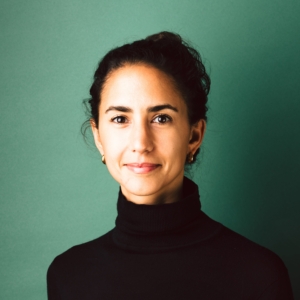
/ Rhoda Berger, CEO at Global Perspectives
It starts with the narratives and stories that we tell
“Narratives matter: the stories we tell ourselves influence how we show up, the strategies we develop, and the ones we execute. This is at the individual, community, and national levels. If we are constantly talking about our deficiencies, we show up as helpless people in need of a saviour. That is why I love the work of Love and Hands and other practitioners using Asset-Based Community Development, which focuses on restoring the dignity and agency for communities to solve their own problems. Our role in the development sector is to walk alongside communities, facilitating them to recognize what they already have as a starting point to solve their own problems. That way, we are not the saviours in their story, but simply friends and allies in their journey. Most especially in this period, with increasing cuts in funding and foreign aid, which serves as a stark reminder that true, sustainable development will come from within, and it starts with the narratives and stories that we tell.”
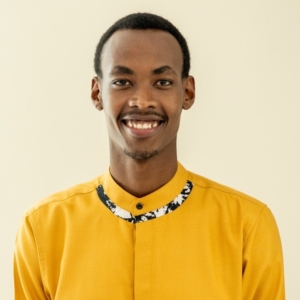
/ Elie Mandela, on a mission to enable and support Africa’s young people to thrive
In uncertain times, it is important for us to keep showing up and to give the best of ourselves
“As the global order shifted, 2025 began with deep uncertainty. That uncertainty inevitably seeped into our efforts at BarefootLaw, shaping our plans, our partnerships, and even the pace at which we could serve communities.
For me, it was compounded by the loss of my friend and colleague Jamina, who had walked with our team from the very beginning. Through her many trials and tribulations, Jamina remained strong and kept offering the very best version of herself to the people that she served, and to everyone around her.
Her quiet resilience reminds me that in uncertain times, it is important for us, as individuals and institutions, to keep showing up and to give the best of ourselves, as we continue our journey to make this world a better place.”

/ Gerald Abila, Founder at BarefootLaw
Uncertainty doesn’t have to stop our work
“This year, our team set out to train 1,000 girls through our sugar-daddy awareness classes, to empower girls to make well-informed decisions on their health. During this project we faced a number of challenges. In the last quarter of 2025, government teachers went on strike, affecting almost every school we worked with. Some schools reduced their activities, others closed completely, and many teachers were not available to support our sessions. This meant our intervention could not continue as we had planned.
We knew we could not pause the project, so we agreed to expand the intervention to private schools temporarily. We were unsure how private schools would respond, but after reaching out, many agreed to have us. Shifting to private schools required adjusting our schedules, rearranging transport, and building new relationships with school administrators. It took some coordination, but once the sessions began, things moved smoothly. Looking back, this experience showed us what resilience looks like in a practical way. It reminded us that plans can change suddenly, but with flexibility and teamwork, the work can still go on. This challenge taught us that uncertainty doesn’t have to stop our work – sometimes it simply pushes us to try a new approach that still leads us where we need to go.”

/ Safaa Garelnabi, Co-founder and CEO at Hope Springs Health Foundation
Recognize risks and intervene early
“This year, we faced challenges that threatened our program outcomes: high teacher turnover in government schools, erratic student attendance driven by hunger, and a complex new curriculum that overwhelmed teachers. We quickly recognized these risks and decided to intervene mid-year. Our team simplified and structured the curriculum, giving teachers clarity and renewed motivation. We also introduced peer coaching so teachers could support each other in real time with classroom and instructional challenges. Finally, we provided porridge for learners, which stabilized attendance and led to remarkably improved academic and social emotional results. Teachers now have time to be creative in their lesson delivery and the children are happy to learn and to come to school.”
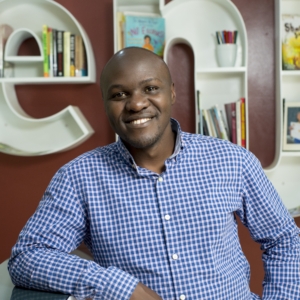
/ Aaron Kirunda, Chief Executive at enjuba
Everything changes when women begin to believe in themselves
“Data shows that when women earn, household incomes rise by at least 30%, and women reinvest nearly 90% of what they earn into their children’s wellbeing, creating change that lasts across generations. At Resonate, we saw this with Mugisha Mutesi. Before the workshop, Mutesi lacked confidence, had no clear vision for her future, and felt little motivation to work. Like many young women, her potential was present, but untapped.
Everything changed when she began to believe in herself. Following the Resonate workshop, she completed her internship at a beauty salon and was offered a job. In time, she used her savings to open her own beauty salon and has created employment for three other people, passing on the lessons she learned and continuing the cycle of empowerment. Yet, despite the evidence that empowering women strengthens families, communities, and economies – financial inclusion gaps persist.
This raises a deeper question: why is gender equality still so hard to achieve? My reflection and learnings are that we should not look at gender equality as a competition between women and men, but collaboration, not one advancing at the expense of the other, but complementing each other for shared prosperity.
Empowering women shouldn’t be a favor or optional. It is a shared responsibility, and a shared benefit. When women rise, everyone rises.”

/ Claire Uwineza, CEO at Resonate Workshops
Invest in understanding your own work
”The Our Sisters Opportunity model for developing women entrepreneurial leaders has evolved significantly over the past five years, and measuring the impact of OSO graduates remains central to our work. Since 2021, our primary objective has been to ensure that OSO graduates achieve a consistent monthly income that corresponds to average monthly wage of around 56,668 Rwandan Francs equivalent to around 33 Euros, according to the International Labour Organization’s (ILO) data benchmarks. Over the past two years, OSO has made substantial investments in deepening its understanding of what constitutes sustainable, dignified, and fulfilling employment for our graduates, as well as the broader significance of informal job creation driven by graduate-led initiatives. We implemented a 5X ROI between 3 to 5 years period. OSO metrics shows that our first cohort achieved ROI of 3.59 in 3 years, our second cohort achieved ROI of 2.09 in 2 years. This has not only strengthened our ability to track graduates’ business income and livelihood transformation, but has also enabled us to refine our model to be more effective and cost-efficient. As a result, the organization has experienced significant growth, expanding our reach as we increase the number of lives we positively impact.”

/ Delphine Uwamahoro, Founder and Executive Director at Our Sisters Opportunity
Photo from Sebastian Schuster on Unsplash